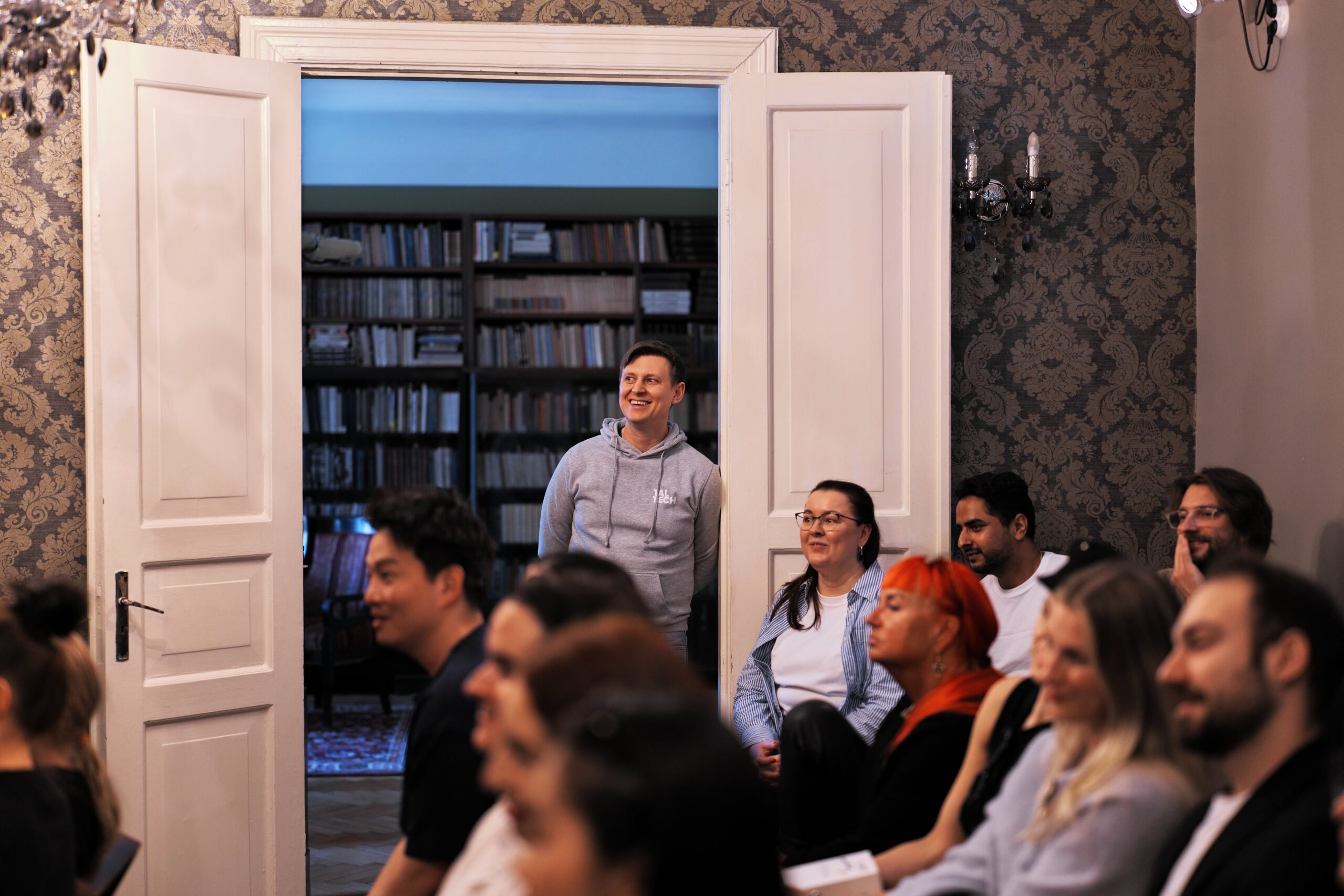
Pavlo teaches the beginner's improv course in English together with Rahel and Lena, and runs jams.
He began studying improv with Rahel in 2023 and has been leading our jams since 2025.
Here are some questions from the students of Improkool to get to know him better.
How did you start doing improv?
It was a purely accidental discovery. On September 3, 2023, I was passing a coffee shop here in Tallinn and went in. While waiting for my coffee, I looked at the message board with various concert advertisements and the like, and noticed something with the magical words "in English" and something about Beginners’ improv course. I had never even heard the word "improv" before, but guessed that it derives from improvisational theatre (the concept that I intellectually understood, but never encountered in practice). Sent an email on the spot, and, within the next 30 minutes enrolled in the course.
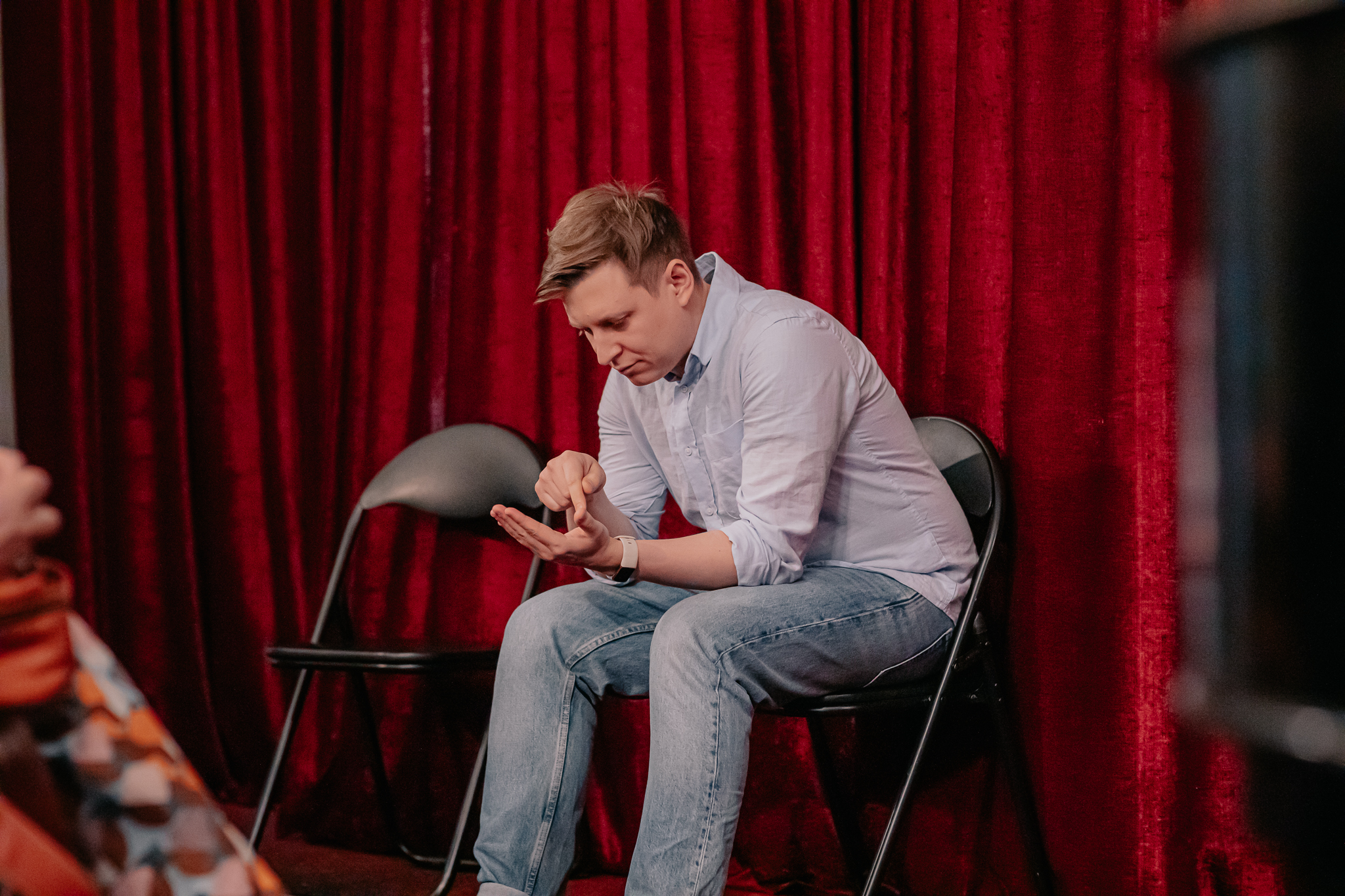
What do you do in your free time and professionally?
I teach finance courses at TalTech, do behavioural finance and economic/finance strategy adjacent research and consulting, and professionally interrogate AI systems for a living. In the little time that remains, I indulge my intellectual curiosity (history, psychology, science), read historical fiction (mostly set in medieval times), go mushroom and berry picking, and walk with my dog.
What is your superpower?
Independent confident writing: I look at the keyboard, not the screen; words several letters apart are the same word to me; and where grammar is concerned, I prefer my own rules.
What does improv give you? Both in daily life and on a deeper level?
It brought exactly the right amount of play back into my life. It turned out that improv is among the very few activities that closely resemble unstructured play, the kind we all enjoyed as kids, and the kind that is almost completely missing from our daily lives. Conceptually, I think improv made my life more rounded and balanced.
How has improv influenced your life?
Improv undeniably made me a happier person.
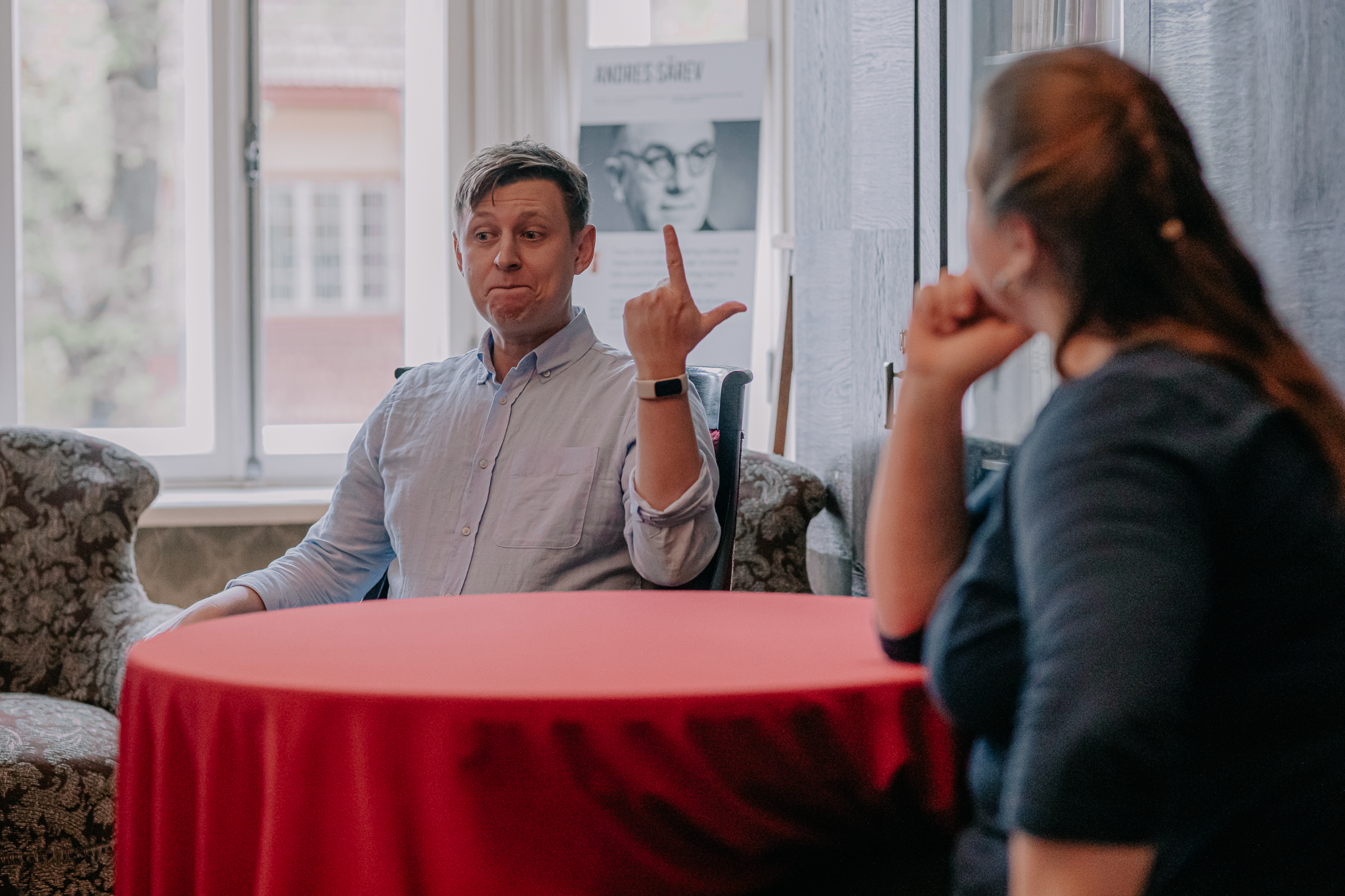
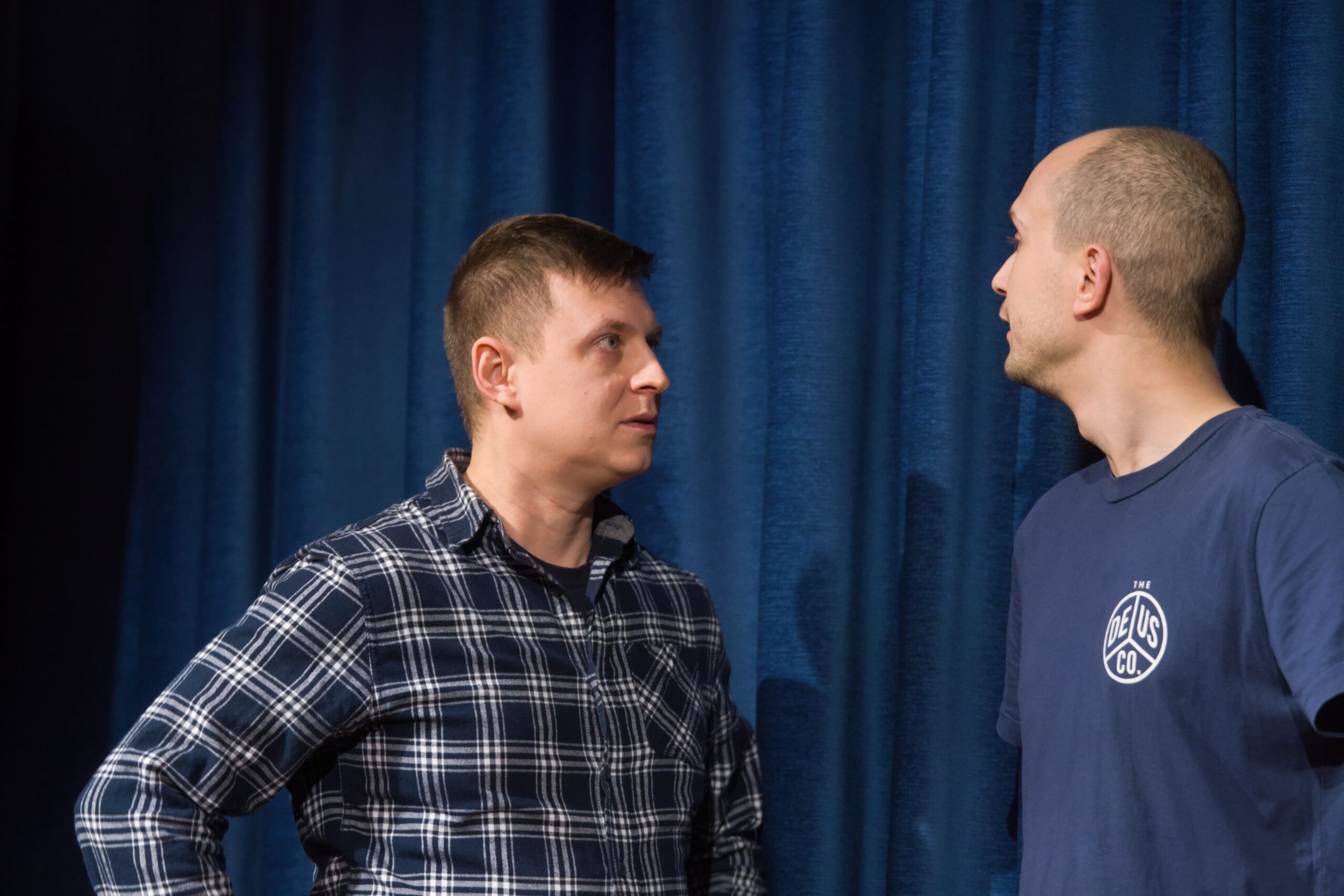
Which challenges have improv principles helped you overcome in your private life?
I think that, as many of us do, I was faking my way through perfectly human worries about being put on the spot, not being funny enough, or looking stupid in front of strangers. Despite being calm and confident on the surface, I was worried internally. Improv did not take this worry away completely (nothing can, I think it is just a part of being human), but doing improv shifted the focus. Sure, in improv we embrace and celebrate mistakes - and this made me much less sensitive to worrying about them in my daily life as well. The most important thing though, is that practicing the famous improv principle "yes, and" shifted my focus from "I need to say something clever or funny, and preferably both at the same time" to "actually listening to the other person and making them look good". Sounds simple and obvious, but I did discover this through improv. I believe this made me a better friend, partner, colleague, and a better teacher (the students recently named me Lecturer of the Year, so apparently it's working).
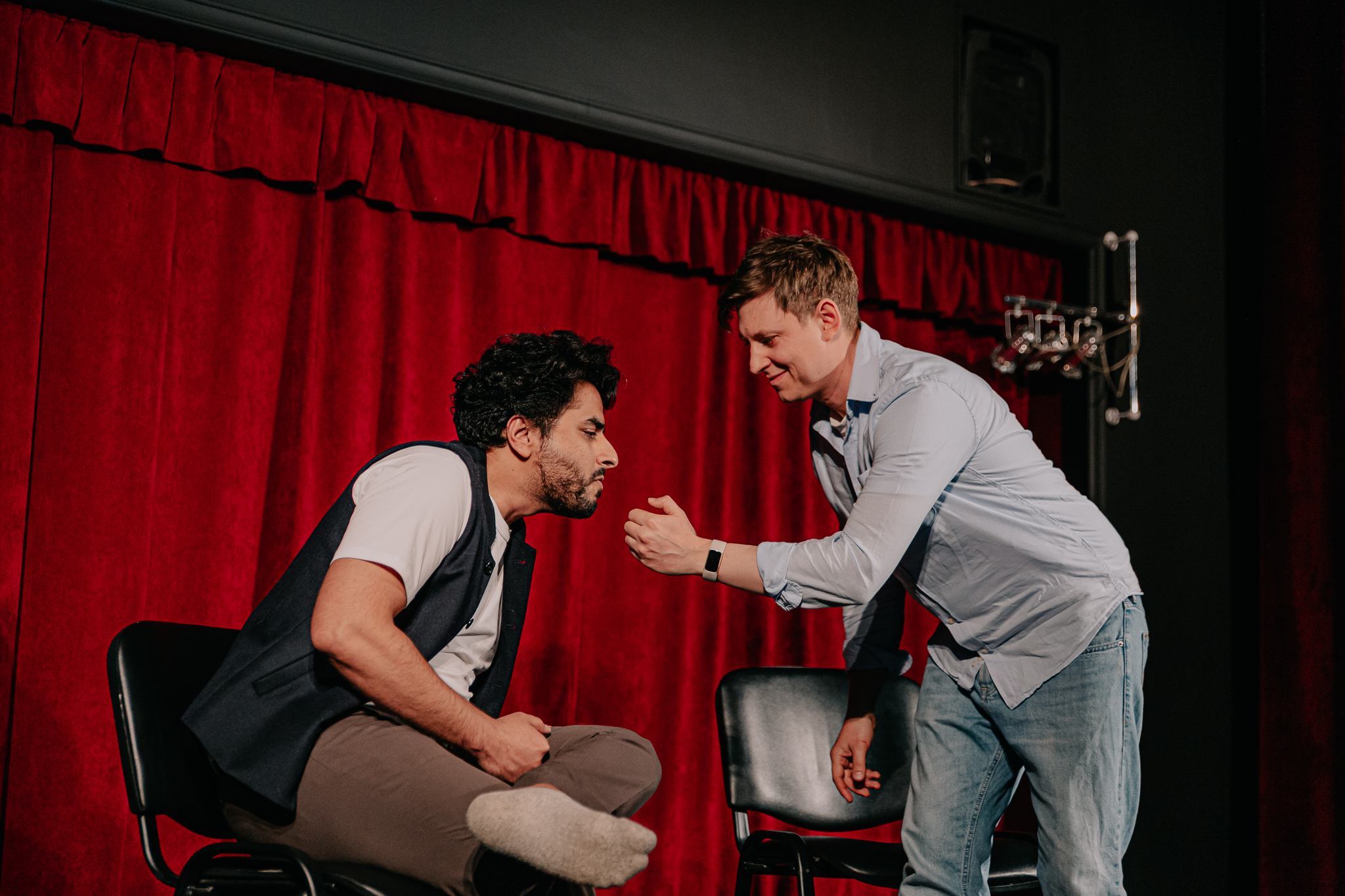
How is teaching improv different than doing improv?
There's a joke about a fish that doesn't know what water is. When you do improv, the "water" is that lightness, the feeling that you can't really get it wrong, that mistakes just become part of the game. You swim in it without noticing it's there. Teaching improv means being the one who makes the water; you build that atmosphere deliberately, so everyone else can just swim. The second difference is where the fun comes from. When I do improv, 80% of the fun is playing and 20% is watching others have a good time. When I teach, it flips: 20% comes from doing, and 80% from watching someone discover something, try a thing for the first time, and surprise themselves.